
Skip to content

Cart

Your cart is empty

Continue shopping
Honduras kaffe: Alt du skal vide om smag, oprindelse og kvalitet
Written by Jonas Munch Schmidt-AndersenUpdated / Country / 5 minutes

Honduran Coffee: Everything You Need to Know About Flavor, Origin, and Quality

Are you looking for a coffee with sweetness, clarity, and a hint of citrus? Then you've probably come across Honduran coffee, one of Central America's most underrated origins. At Copenhagen Coffee Lab, we work directly with farmers in Honduras, and in this article, we'll guide you through its flavor, cultivation, and how to get the most out of the beans at home.

In brief: What is Honduran coffee? Honduran coffee is Arabica coffee grown in the highlands of Central America, typically between 1,100 and 1,800 meters above sea level. It is characterized by a sweet, clean flavor profile with notes of chocolate, nuts, and a slight hint of citrus, and a mild acidity that makes it pleasant to drink both as espresso and filter coffee.
What characterizes the taste of Honduras coffee?

If you've asked yourself how Honduras coffee actually tastes, the answer is typically: sweet, clean, and balanced. Our Arabica guide describes Honduras coffee as having a "sweet, clean profile with citrus notes," and this is reflected in our own beans from there.

In our Proexo series from Honduras, you will specifically find these notes:

  • Marzipan
  • Dark chocolate
  • Pine nuts

The sweetness is typically high (4 out of 5 on our taste scale), the acidity is moderate, and the body is medium, making it an easy-to-like coffee, whether you prefer a powerful espresso or a more nuanced filter cup.

Where and how is the coffee grown?

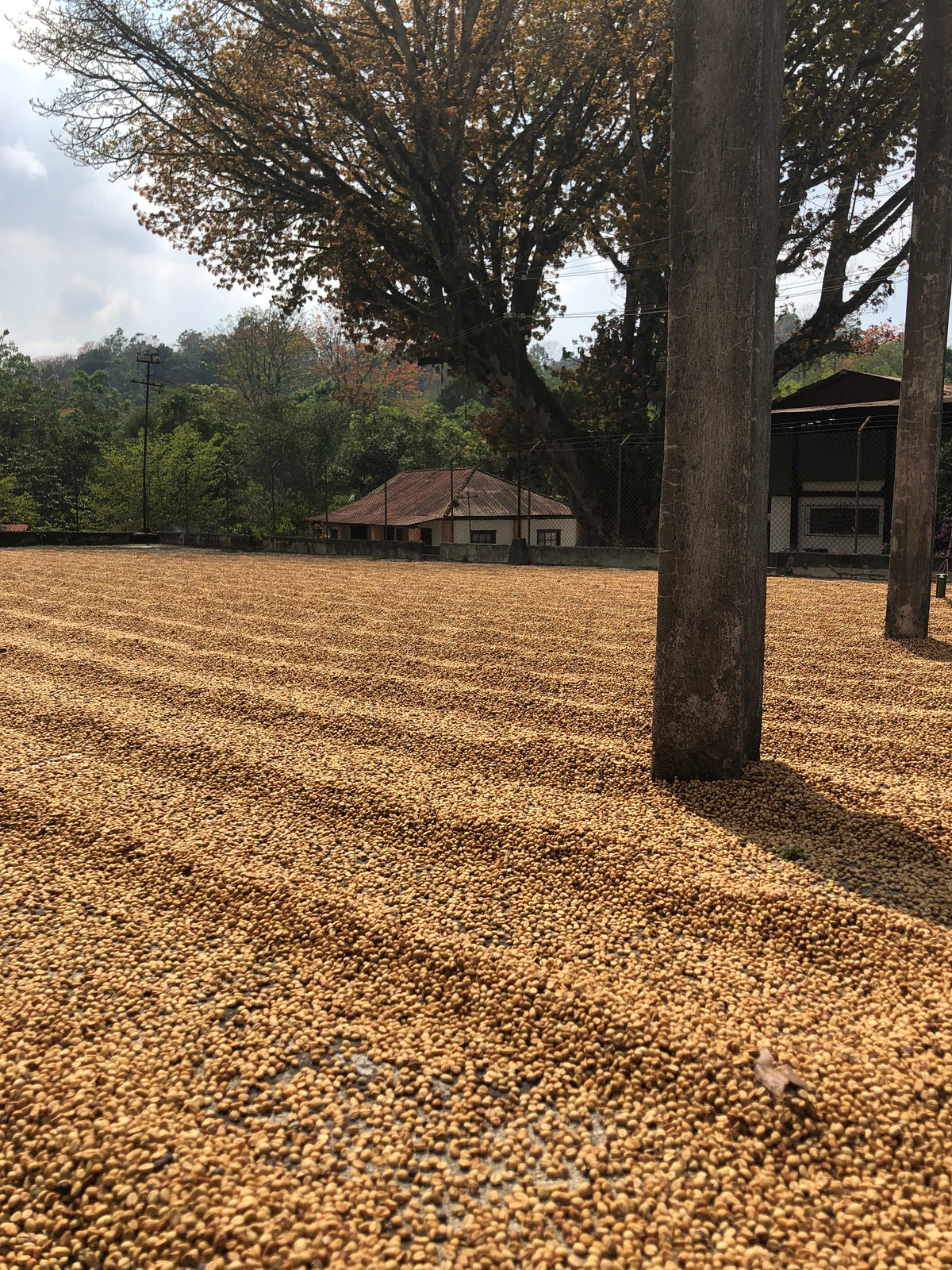
Honduras is currently one of the largest coffee-producing countries in Central America. The mountainous landscape provides ideal conditions for Arabica coffee, which thrives best at high altitudes, where the beans ripen slowly and develop a more concentrated flavor.

Our own Honduras coffees come from two different regions, which in itself shows how much variation there is even within one country:

Proexo Espresso
Region: Copan
Altitude: 1,100-1,600 masl
Varieties: Caturra, Catuai, Lempira
Process: Washed
Roast: Espresso
Flavor notes: Marzipan, dark chocolate, pine nuts

Proexo Filter
Region: Olancho
Altitude: 1,100-1,600 masl
Varieties: Mixed varieties
Process: Washed
Roast: Filter
Flavor notes: Marzipan, dark chocolate, pine nuts

The washed process that both of our Honduras coffees undergo helps to highlight the cleanliness in the cup. This is why you experience such a distinct and "clean" taste, as opposed to the wilder, more fermented notes found in, for example, natural-processed coffees.

Honduran coffee compared to other origins

One of the questions we most often encounter is how Honduran coffee differs from other popular origins. Here's a quick overview:

Honduras
Typical flavor profile: Sweet, clean, chocolate and citrus
Body: Medium
Acidity: Mild

Brazil
Typical flavor profile: Chocolate, nutty, low acidity
Body: Full
Acidity: Low

Colombia
Typical flavor profile: Balanced, caramel and nuts
Body: Medium
Acidity: Medium

Ethiopia
Typical flavor profile: Floral and fruity
Body: Light
Acidity: High

In short: If you choose Honduran coffee, you get one of the most versatile and "safe" origins; it's rarely too acidic and rarely too strong, making it an excellent choice whether you're new to specialty coffee or have been drinking it for years.

Is Honduran or Guatemalan coffee better? There's no definitive answer to that; it depends on your taste. Guatemalan coffee often has a bit more spicy depth and acidity, while Honduran is typically milder and sweeter. Experiment and let the cup decide.

Our Honduran coffee at Copenhagen Coffee Lab

We don't see ourselves as coffee suppliers, but as coffee lovers who travel the world to find the best beans, often in close cooperation with our local agents and the farmers themselves. From Honduras, we have selected three different products, depending on how you prefer to brew your coffee:

Copenhagen Coffee Lab explains: All our beans are freshly roasted in our own roastery in Sydhavnen, Copenhagen, never further from your cup than necessary.

How to brew Honduran coffee best

Because the sweetness and mild acidity of Honduran coffee are best expressed when the preparation matches the roast of the bean, we recommend:

  • Espresso (Proexo Espresso): 20 g finely ground coffee, yield of 40 g, extraction of 23-28 seconds.
  • Filter (Proexo Filter): 30 g coffee to 510 ml water.

If you're unsure which method suits you, you can read more in our general guide, where we delve into coffee types, varieties, equipment, and techniques.

Is Honduran coffee organic and sustainable?

The short answer: it depends on the specific product. We select our Honduran collaborations based on quality and relationship with the farmer first, but several of our coffees, including PS Blend, are organic. You can always see certifications (organic and/or Fairtrade) directly on the individual product page before purchasing.

FAQ

What makes Honduras coffee special compared to other Arabica coffees?

It is the combination of high cultivation altitude and washed process that yields an unusually clean and sweet cup with a hint of citrus, without the strong acidity you find in, for example, Ethiopian coffee.

Can I use Honduras coffee for both espresso and filter?

Yes. We offer both an espresso roast (Proexo Espresso) and a filter roast (Proexo Filter) variant, precisely because the degree of roasting significantly impacts how the flavor is expressed in the cup.

How strong is Honduran coffee in caffeine content?

Since it's 100% Arabica, the caffeine content is lower than in Robusta coffee. This is one of the reasons why Honduran coffee is perceived as mild and well-rounded rather than sharp and bitter.

How long does the coffee stay fresh after I've opened the bag?

We recommend using the beans within 4-6 weeks of the roast date for best flavour, and storing them airtight and in a dark place.

How do I know if Honduran coffee suits my taste?

If you prefer a sweet, well-rounded coffee with low to moderate acidity and notes of chocolate and nuts rather than fruity or floral tones, then Honduran coffee is an excellent place to start.