Skip to content

Cart

Your cart is empty

Continue shopping
Moka pot: sådan brygger du en rig og rund kande
Written by Jonas Munch Schmidt-AndersenUpdated / Brewing methods / 5 minutes

Moka pot: how to brew a rich and full-bodied pot

The Moka pot is one of the most overlooked pieces of equipment in the kitchen and one of the most forgiving once you understand it. It produces a concentrated, rich coffee with plenty of body, and it doesn't require electricity, paper filters, or a large budget. For us, it's a favorite when we want something similar to espresso without an espresso machine on the table.

Here, you'll find the full procedure, the mistakes to avoid, and our take on the coffee that truly makes a Moka pot sing.

In short, a Moka pot brews coffee by using steam pressure to force hot water up through ground coffee. You fill water in the bottom, coffee in the funnel, screw it together, and place it on medium heat. After 4–5 minutes, the coffee bubbles up to the top. Remove it as soon as the sound becomes "hissing." Use a medium-fine grind and a darker, chocolatey coffee for the best result.

What is a Moka pot?

A Moka pot, also called a mocha pot or espresso pot, is a coffee maker you place directly on the stovetop. It consists of three parts: a water chamber at the bottom, a funnel-shaped filter basket for the coffee, and an upper pot where the finished coffee collects. When the water at the bottom is heated, the steam creates pressure that forces the water up through the coffee and into the top.

The result is a coffee that is stronger and more concentrated than filter coffee, but slightly milder and less dense than true espresso. Think of it as the middle ground: café-like intensity, made on the stove.

How to brew coffee in a moka pot, step by step

The short answer to how to use a moka pot?: fill the base with water to just below the valve, fill the filter basket with coffee without pressing, screw it together, and brew on medium heat until the coffee bubbles up. Here's the long version.

What you'll need

  • A moka pot in the desired size (2, 3, 4, or 6 cups)
  • Freshly roasted, freshly ground beans
  • Hot water (preferably preheated)
  • A spoon and a little patience

Step-by-step

1: Fill the base with hot water to just below the safety valve. Hot water provides a shorter brew time and less "boiled" taste.

2: Insert the filter basket and fill it with ground coffee. Fill it completely and level the surface, but do not press.

3: Screw the top on tightly. Use a tea towel, as the pot will be hot.

4: Place on medium heat with the lid open. This way, you can monitor the process and react in time.

5: Wait until the coffee bubbles up in a steady, golden stream. Turn down the heat if it splutters and hisses violently.

6: Remove it when the sound becomes hissing/gurgling. Optionally, cool the base under cold water to stop the extraction.

The entire process typically takes 4–5 minutes from a cold start. If you are using an induction hob, your pot must be made of steel or have an induction plate; classic aluminum pots do not work on induction without an adapter.

Typical mistakes and how to avoid them

  • Too high heat: results in bitter, burnt coffee. Medium heat is your friend.
  • Pressed coffee: creates too much resistance and can make the brew uneven. Fill loosely.
  • Waiting too long: the last burst is pure steam and bitterness. Remove it in time.
  • Old coffee: no technique will help here. Freshness is half the taste.

Which coffee is best suited for a moka pot?

This is where most guides stop, but we continue. A moka pot is concentrated, so it amplifies everything in the bean: both the good and the unfortunate. Therefore, the choice of coffee matters more here than in almost any other brewing method.

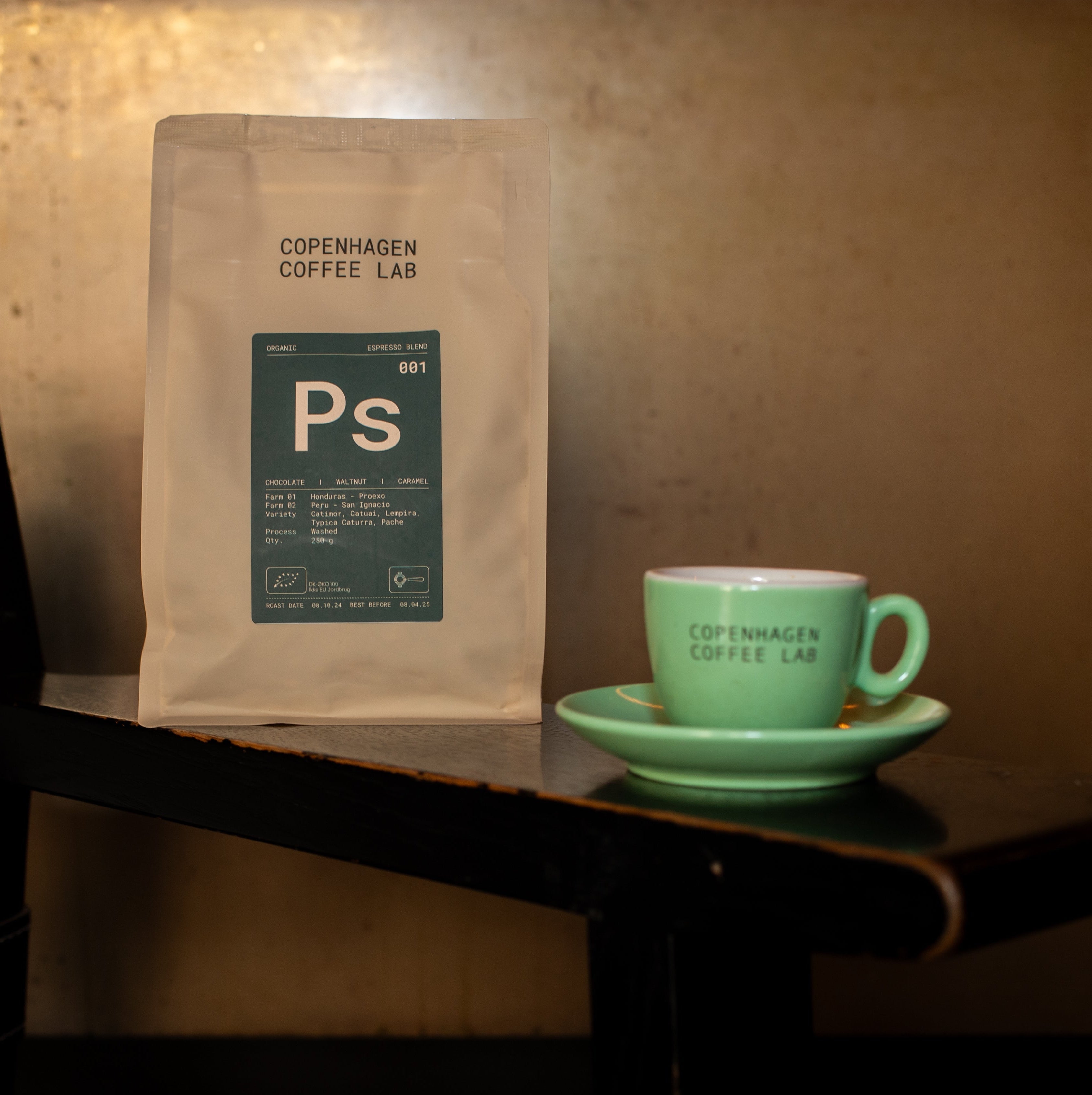
Our recommendation: go for a medium to dark roast with notes of chocolate, nuts, and caramel. This type of coffee meets the moka pot's intensity with sweetness and body instead of becoming sharp. Light, acidic coffees can certainly be used, but they require more precision to avoid tasting dry.

Should the coffee be ground at home or bought pre-ground? Both work, as long as the grind is suitable (see next section). If you grind yourself, you get the freshest cup. If you want to make it easy, we can grind the coffee for your brewing method when you order.

Grind size, dosing, and temperature

A moka pot requires a grind size that is finer than for filter coffee but coarser than for espresso, roughly like fine table salt. Too fine, and the coffee will be bitter and can clog; too coarse, and it will be thin.

Grind size: Medium-fine (like fine salt) - balances flow and extraction.

Dosing: Fill the filter basket evenly, without tamping - the basket's size is the "recipe".

Water: Hot, up to just below the valve - provides a shorter and cleaner brew.

Heat: Medium - you avoid a burnt and bitter taste.

Brew time: Approx. 4-5 minutes - longer will result in more bitterness.

The great thing about the moka pot is that the filter basket practically doses for you: if you fill it evenly, you'll hit a good ratio every time.

Moka pot vs. espresso vs. French press

A frequent question is what is the difference between moka and espresso?In short: espresso is brewed under much higher pressure (9 bar vs. the moka pot's 1–2 bar), so espresso is denser, with crema and a more intense expression. The moka pot comes close in strength but is rounder and less concentrated.

Moka Pot
Strength: High
Body: Full-bodied
Equipment: Stove and moka pot
Best for: Espresso-like coffee without a machine

Espresso
Strength: Very high
Body: Dense, crema
Equipment: Expensive machine
Best for: Short, intense shot and milk drinks

French Press
Strength: Medium
Body: Heavy, oily
Equipment: Inexpensive
Best for: Relaxed, full-bodied filter coffee

If you want to compare with other methods, we have guides for several of them, including our approach to filter coffeeand AeroPress.

Copenhagen Coffee Lab Perspective

For us, the moka pot isn't about nostalgia, but about getting a lot from a little. It proves that good coffee doesn't require an expensive setup; it requires fresh beans, the right grind size, and a little attention in the final seconds. If you master these three things, you'll brew a pot that surprises most espresso machines in its price range.

FAQ

Can you make real espresso in a moka pot?

Not quite. A moka pot brews under 1–2 bar pressure, whereas an espresso machine operates at 9 bar. You get a coffee that resembles espresso in strength and body, but without the thick crema. For many purposes, including milk-based drinks at home, it's more than good enough.

How many cups is a "6-cup" moka pot?

"Cups" refers to small Italian espresso cups, not large mugs. A 6-cup pot therefore yields approximately six small, concentrated servings, equivalent to a couple of regular coffee mugs.

Can I use a moka pot on induction?

Only if the pot is made for it. Classic aluminium pots do not work on induction without an adapter plate, while steel models often do. Check the bottom of your pot before buying.

How do I clean my moka pot?

Even though the old Italian legend says you shouldn't rinse your moka pot, we recommend cleaning it. Rinse the parts in warm water and let them air dry, avoiding dish soap and dishwashers, especially for aluminum, as this can cause an off-taste and degrade the surface. Wipe the rubber gasket and replace it when it becomes stiff.

Why does my moka pot coffee taste bitter?

Often too high heat, too fine a grind, or too long a brewing time. Turn the heat down to medium, use a medium-fine grind, and remove the pot from the heat as soon as it starts to hiss.