Skip to content

Cart

Your cart is empty

Continue shopping
Hvad er liberica?
Written by Jonas Munch Schmidt-AndersenUpdated / Coffee variety / 5 minutes

What is liberica?

Most people know arabica, and many have heard of robusta. But there's a third coffee bean that almost never makes it into your cup: liberica. It comes from the plant Coffea liberica, makes up only a fraction of the world's coffee production, and has a taste that divides opinions, in a good way.

In short, Liberica is the third major coffee species after arabica and robusta. The beans are large and irregular, and the taste is strong and distinct, often described as smoky, woody, and fruity all at once. It is mostly grown in Southeast Asia and West Africa and accounts for less than 2% of global coffee production.

How liberica tastes

Liberica doesn't taste like "more coffee"; it tastes different. Where arabica is nuanced and sweet, and robusta is strong and bitter, liberica is characterized by a deep, almost smoky character with notes of dark wood, dried fruit, and sometimes a floral, almost jackfruit-like aroma.

It's a bean with a distinct personality. Some fall in love with it immediately; others find it too wild. Both reactions make sense, and that's precisely why it's so interesting to taste your way through.
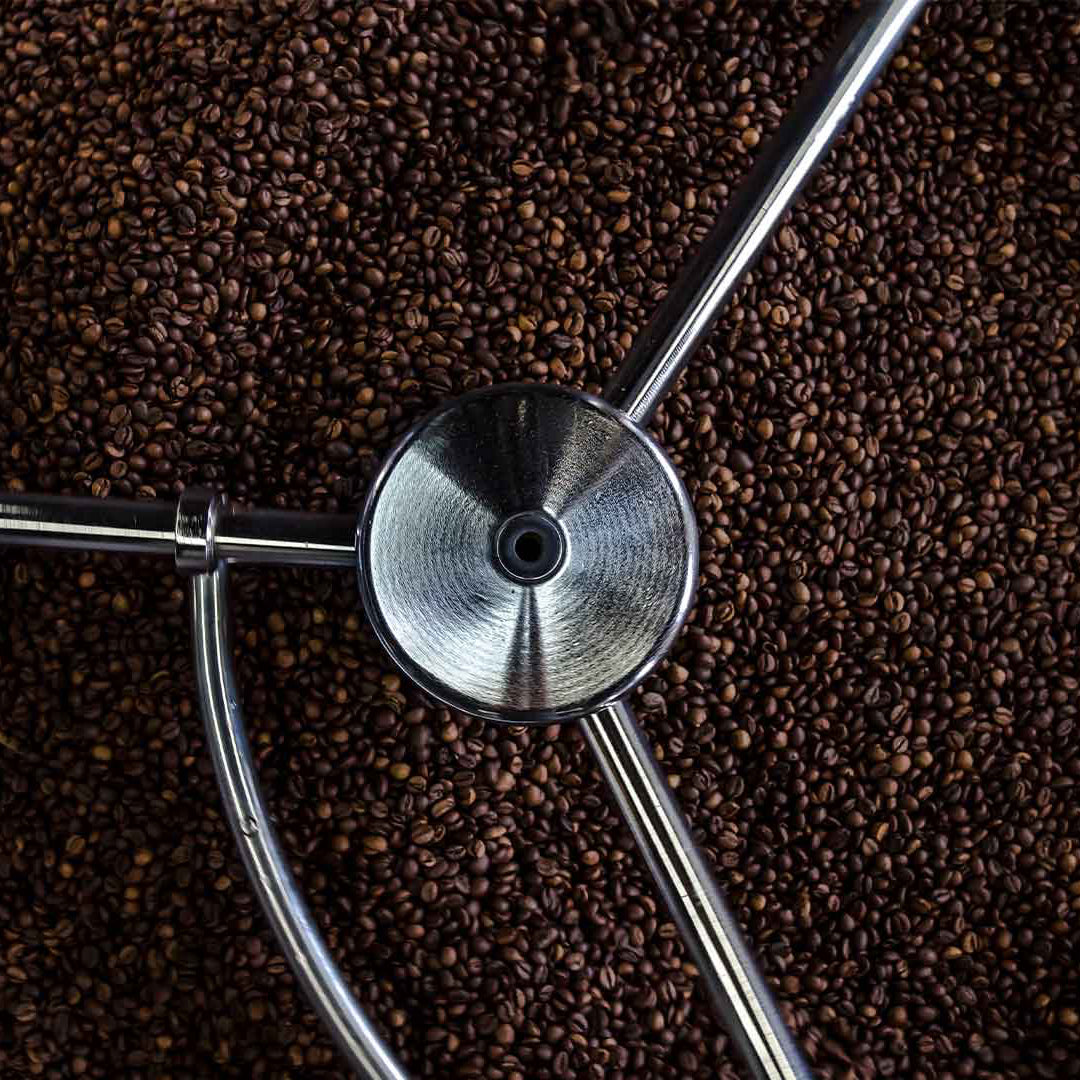
Liberica, Arabica, and Robusta: The three beans side by side

To understand Liberica, it helps to see it in relation to the two beans you're probably familiar with. Here are the key differences:

Arabica
Share of global production: Approx. 60-70%
Taste: Nuanced, sweet, and aromatic
Caffeine: Low
Bean shape: Even, oval
Cultivation: Highlands, requires stable climate
Typical use: Specialty coffee

Robusta
Share of global production: Approx. 30-40%
Taste: Strong, bitter, and earthy
Caffeine: High
Bean shape: Round and small
Cultivation: Hardy and lowlands
Typical use: Blends, instant

Liberica
Share of global production: Under 2%
Taste: Smoky, woody, and fruity
Caffeine: Medium
Bean shape: Black and irregular
Cultivation: Hardy, hot, and humid climate
Typical use: Local specialty, niche coffee

In short: Arabica is about finesse, Robusta about strength, and Liberica about character. If you want to delve deeper into the most widespread of the three, you can read our guide towhat Arabica beans are.

Can you brew liberica at home?

Yes. Liberica is brewed with the same equipment as any other coffee, but because the bean is so strong in flavor, you get the most out of methods that allow for its aroma. A slightly coarser grind and a calm extraction suit it well.

French pressis very suitable for liberica, as it enhances richness and smoky, woody notes.

Pour-over/filteris well-suited for liberica, as it opens up fruity and floral notes.

Espressois fine, but requires getting used to. Can give an intense and rich flavor. And can often be found in blends.

A good place to start is a French press: it allows liberica to unfold without hiding its distinctive character. If you like dark, rich cups, you will probably find it exciting.

Why is liberica so rare?

Liberica accounts for almost nothing in the world's coffee production, and there are practical reasons for this: the beans are large and uneven, the trees can be difficult to harvest, and the yield is lower than with arabica and robusta. Therefore, liberica often becomes a local specialty — most widespread in countries like the Philippines and Malaysia, rather than a global commodity.

Precisely its rarity is part of its charm. When you taste liberica, you taste something that most coffee drinkers never try.

This is how we view liberica at Copenhagen Coffee Lab

For us, good coffee is about honoring the bean, highlighting its origin, processing, and roasting so that it tastes like what it is. With this approach, liberica is a fascinating study: a bean where the character is so clear that it challenges what we expect from a cup of coffee.

FAQ

Is liberica stronger than arabica?

In taste: yes, liberica is perceived as stronger and more pronounced. In caffeine content, it lies between arabica (low) and robusta (high).

What does the word "liberica" mean?

The name comes from Liberia in West Africa, where the species was originally botanically described. The plant's Latin name is Coffea liberica.

Is excelsa the same as liberica?

Excelsa is botanically classified as a variant within the liberica family but has its own more acidic-fruity flavour profile. They are related, not identical.

Can Liberica be drunk as espresso?

Yes. It's used in some espresso blends to provide body and a distinct character, but as a standalone espresso, it requires some getting used to.