Skip to content

Cart

Your cart is empty

Continue shopping
Cowboy kaffe, sådan brygger du den perfekte kop uden filter
Written by Jonas Munch Schmidt-AndersenUpdated / Brewing methods / 5 minutes

Cowboy coffee: how to brew the perfect filterless cup

Cowboy coffee is one of the most honest ways to make coffee: beans, water, and heat, with no filter. You might know it from a campfire on a camping trip or from an old kettle on the stove. We love it because it reminds us that good coffee doesn't require expensive equipment. It just needs good beans and a little patience. Below, you'll find our simple method for a rich, clean cup, without a mouthful of grounds.

In short, cowboy coffee is coarsely ground coffee boiled directly in water without a filter. You stir the coffee into water near boiling point, let it steep for 4 minutes, and let the grounds settle before carefully pouring. The result is a strong, rustic cup of coffee.

What is cowboy coffee?

Cowboy coffee (also spelled cowboykaffe) is coffee brewed entirely without a filter, typically over a campfire or on a stove in a pot or kettle. The name comes from the time when cowboys made coffee directly in the kettle over an open fire. The method is related to campfire coffee and Scandinavian "boiled coffee."

What's special is that the coffee and water are in direct contact throughout the entire process. This results in a rich, strong cup with plenty of body, but it also requires proper handling of the grounds. We'll cover that further down.
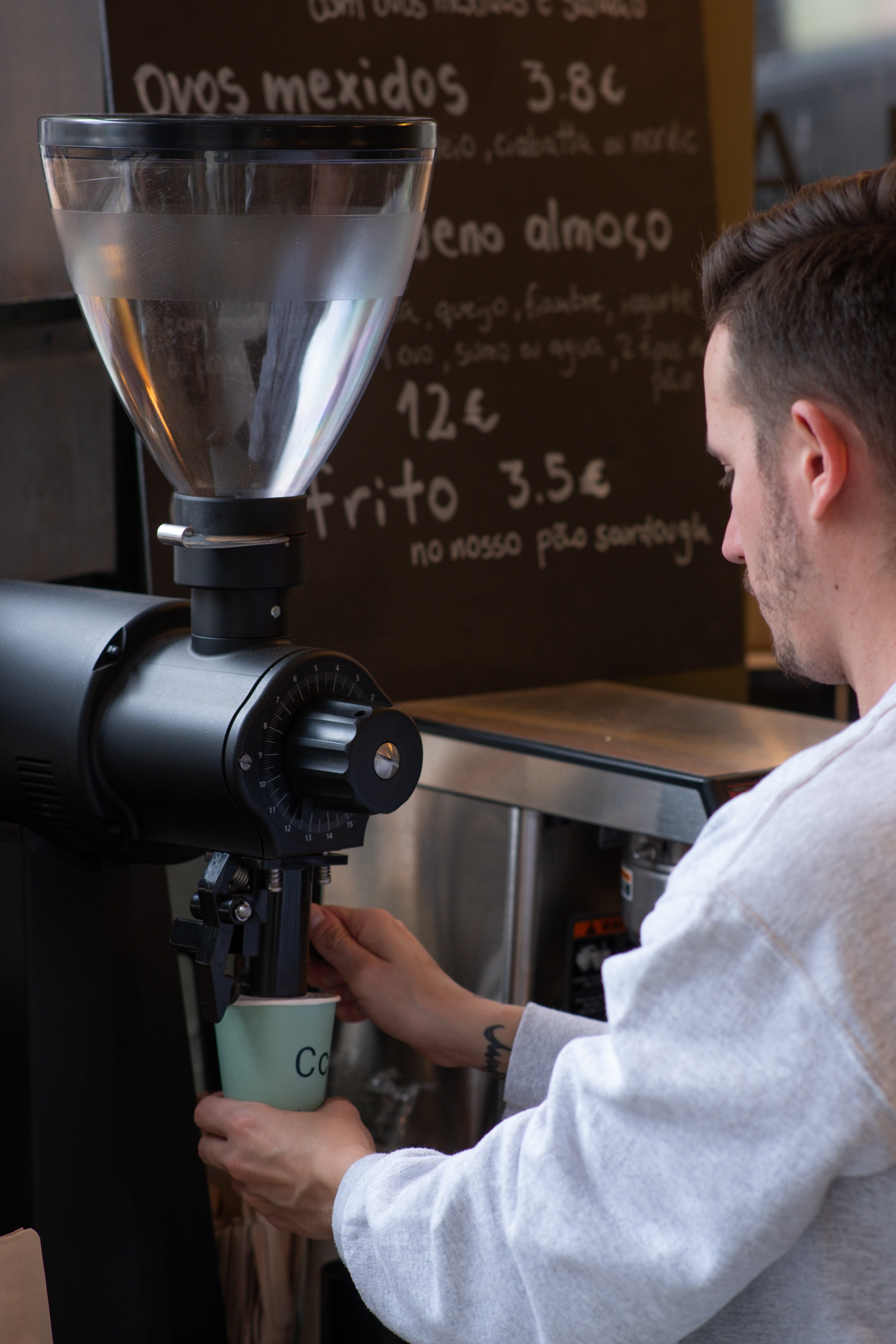
How to brew cowboy coffee

All you need is a heat source, a pot or kettle, water, and coarse-ground coffee. Here is our recommended starting point:

Coffee/water ratio: approx. 60 g coffee per liter of water (adjust to taste)
Grind size: Coarse, like coarse sea salt
Water temperature: 92–96 °C (just below boiling point)
Brewing time: Approx. 4 minutes
Resting time before pouring: 1-2 minutes, so the grounds sink

What you need

  • Coarse-ground, freshly roasted beans
  • A pot, kettle, or coffee maker
  • Clean water, preferably filtered
  • A spoon for stirring

Instructions

  1. Heat the water until it almost boils (small bubbles at the bottom).
  2. Remove the pot from the heat for a moment so the temperature drops slightly.
  3. Add the coarse-ground coffee and stir.
  4. Let the coffee brew for approx. 4 minutes.
  5. Stir once, then let the coffee rest for 1–2 minutes so the grounds sink to the bottom.
  6. Pour slowly and carefully, so the grounds remain in the pot.

A little trick: a splash of cold water at the end helps the grounds sink faster.

How to avoid grounds in your cup

This is the question people most often ask about cowboy coffee, and the answer lies in three things: grind, stillness, and pouring technique. Use a coarse grind so the fine particles don't float around. Let the coffee rest after brewing, so the grounds fall to the bottom. And pour gently without tipping the pot too much. If you want to be absolutely sure, you can pour the coffee through a sieve.

The grind size is the most important factor. If the coffee is ground too fine, you will get a murky and over-extracted cup. If you buy pre-ground coffeefrom us, choose a coarse grind size, or buy whole beansand grind them coarsely yourself.

The right coffee for cowboy coffee

Because cowboy coffee doesn't hide anything behind a filter, the quality of the beans is extra important. A fresh, well-roasted bean yields a clean, sweet cup even when boiled. An old or cheap bean, on the other hand, quickly becomes flat and bitter.

We roast all our beans in our own roastery in Copenhagen and always send coffee that has been roasted within the last 10 days. For cowboy coffee, we recommend a balanced, sweet coffee with good body, for example our Almibar from Colombia, which has soft, nutty notes that stand out beautifully in a strong brew. See our full selection of freshly roasted coffeeand feel free to choose organicif you want coffee with a conscience.

Cowboy coffee vs. other methods without a machine

Cowboy coffee is not the only way to make coffee without an espresso machine. Here's how it differs:

Cowboy coffee
Filter: No
Cup character: Strong, rustic and full-bodied
Best for: Campfires, trips and stovetops

French Press
Filter: Partially (metal mesh)
Cup character: Full-bodied, but cleaner
Best for: Home, breakfast

Pour-over (e.g. Kalita):
Filter: Yes (paper)
Cup character: Clean, clear and aromatic
Best for: Flavor nuances

Drip coffee:
Filter: Yes
Cup character: Clean and light
Best for: Everyday, large pots

If you want the rustic expression without so much sediment, a French press is closest to cowboy coffee. If, on the other hand, you want to highlight the fine flavor notes, a pour-overis the way to go.

Copenhagen Coffee Lab perspective We build our entire business on specialty coffee and precise brewing, but we have great respect for simplicity. Cowboy coffee reminds us that coffee is first and foremost about good beans and simplicity. If you use coffee you love, even the most stripped-down method tastes fantastic.

Conclusion

Cowboy coffee is coffee stripped down to its essence: beans, water, heat. With a coarse grind, a little patience for the grounds to settle, and fresh beans, you get a cup that is both strong and clean.

FAQ

What is the difference between cowboy coffee and boiled coffee?

It is essentially the same principle: coffee brewed without a filter. "Cowboy coffee" is often used for the campfire variant, while "boiled coffee" is the Nordic term for coffee brewed in a pot on the stove.

How long should cowboy coffee steep?

About 4 minutes after adding the coffee. Let it rest for 1–2 minutes so the grounds can sink before pouring.

Can you use regular ground coffee?

Yes, but choose a coarse grind. Finely ground coffee results in more sediment and a bitter cup. Our pre-ground coffeecan be ground to suit the brewing method.

Should the water boil?

Preferably not boiling. Aim for 92–96 °C, just below boiling point. Boiling water can make the coffee bitter.

Is cowboy coffee stronger than filtered coffee?

It is often perceived as stronger and fuller-bodied because the coffee and water are in constant contact without a paper filter. However, the strength primarily depends on your coffee-to-water ratio.