Skip to content

Cart

Your cart is empty

Continue shopping
Kenya Kaffe: Sådan Smager Kenyansk Kaffe, Og vi elsker den
Written by Rasmus Kvistgaard JensenUpdated / Country / 5 minutes

Kenya Coffee: What Kenyan Coffee Tastes Like, And Why We Love It

Kenyan coffee is known as one of the world's clearest and most vibrant coffee varieties, with an acidity reminiscent of blackcurrants and citrus, and a sweetness that often leans towards berries and stone fruit. At Copenhagen Coffee Lab, we have chosen to build our Kenyan range around Baragwi, a coffee from the Rungeto region in Kirinyaga, precisely because it shows what Kenyan coffee can be when the craftsmanship is top-notch.

What is Kenyan coffee?

When people talk about "Kenyan coffee", they are not referring to a single flavor, but to a style of coffee grown in Kenya's central highlands, typically in regions such as Kirinyaga, Nyeri, and Kiambu. What binds most Kenyan coffees together are three things: the varieties, the washed processing method, and the high growing altitude, which is often between 1,500 and 2,100 meters above sea level.

Why does Kenyan coffee taste so different? The double wash explained

What is often asked when people Google Kenyan coffee is why it tastes so different from, for example, a Brazilian or Honduran coffee. The answer lies primarily in the process.

Most specialty coffees from Kenya are processed using a double wash process, often called "Kenya washed":

  1. Pulping, the coffee cherry's skin and pulp are removed mechanically.
  2. First fermentation, the beans are fermented in water tanks for typically 12-24 hours.
  3. Washing, the beans are washed with clean water.
  4. Second soaking, the beans are placed in clean water again for an additional 12-24 hours, which is what makes the Kenyan method unique.
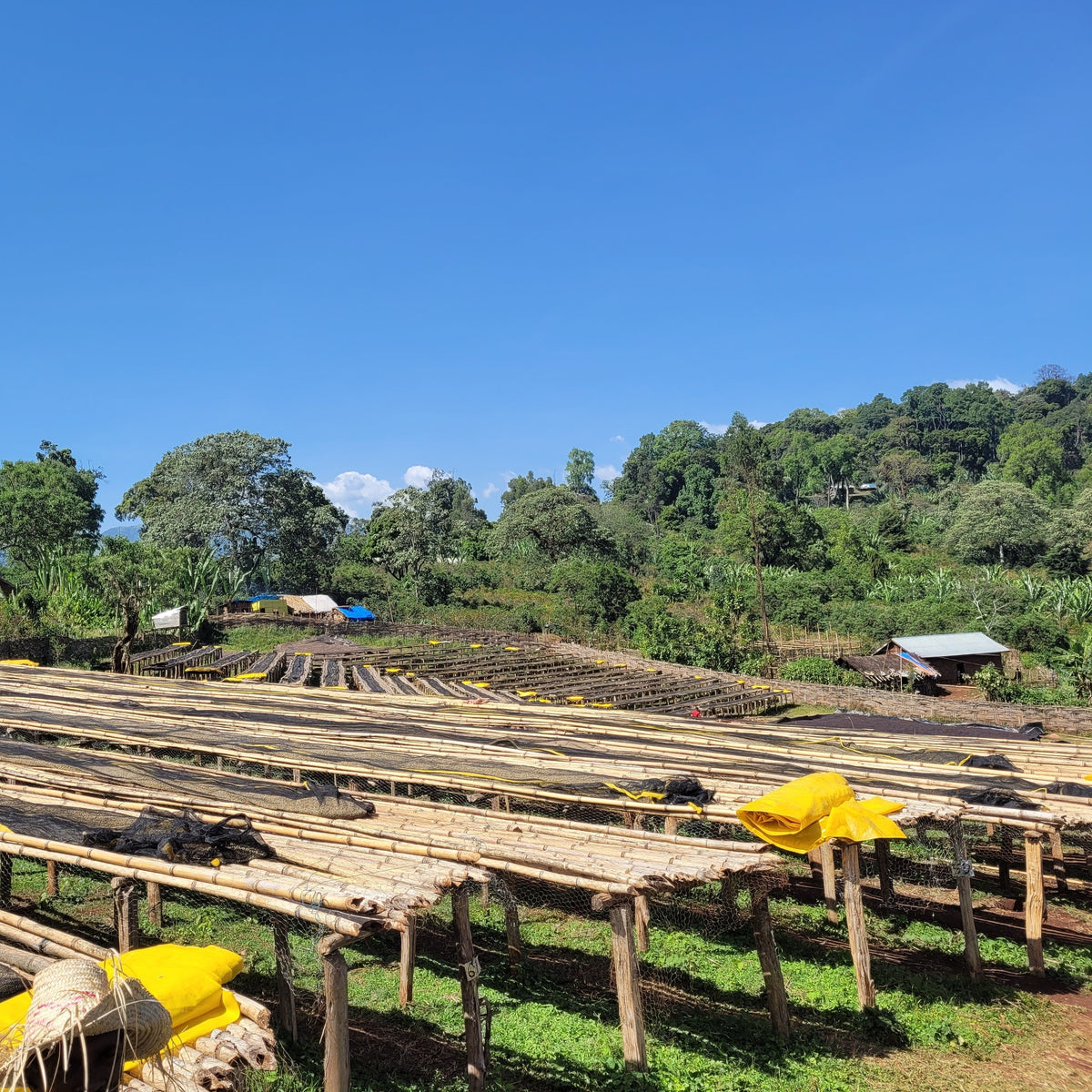
  5. Drying, the beans are dried slowly on raised drying beds.

The extra soaking step helps give Kenyan coffee its characteristic clarity, acidity, and "clean" expression in the cup.

Flavor profile: What can you expect in the cup?

Characteristics and how these typically appear in Kenyan coffee

Acidity: High, often compared to citrus/currants
Sweetness: Fruity, berries and stone fruit
Body: Medium to full
Flavor notes: Blackcurrant, citrus, tomato sweetness, berries
Process: Washed (double)
Varieties: SL28, SL34, Ruiru 11, Batian

The characteristic "tomato sweetness" that many coffee enthusiasts describe in Kenyan coffee is not a flaw in the flavor; it is a recognized, complex sweetness that can occur in particularly well-processed Kenyan lots, and which works together with the fresh acidity.

Kirinyaga and Rungeto, the region behind our Karimikui

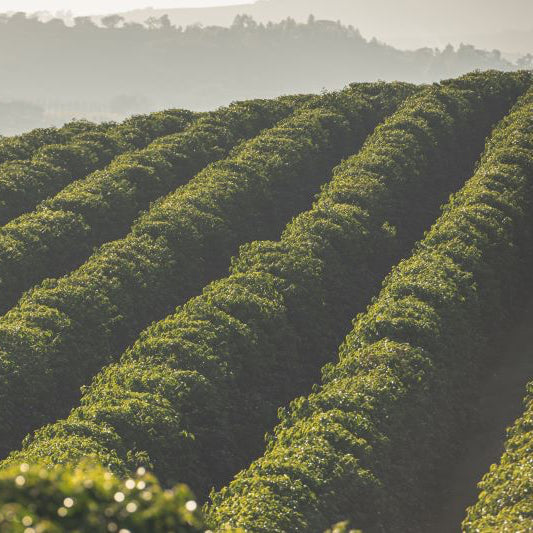
Kirinyaga is located in central Kenya, in the shadow of Mount Kenya, and is known for its nutrient-rich, volcanic soils and high growing altitudes, both of which are crucial factors for complex, well-structured coffees. Our Baragwi is grown here, 1,600-1,800 meters above sea level, by smallholder farmers.

This is exactly the type of origin story we at Copenhagen Coffee Lab emphasize: we don't just choose "coffee from Kenya" we choose specific cooperatives and micro-regions whose quality we can stand behind.

Kenyan coffee vs. other origins

A question that often accompanies "Kenyan coffee" in searches is how it differs from other well-known origins. Here is a quick comparison based on our own selection:

Country: Kenya
Typical flavor profile: Tart, fruity, clear
Process: Washed
Example from us: Baragwi

Country: Ethiopia
Typical flavor profile: Floral, fruity, tea-like
Process: Washed/natural
Example from us: Magarissa Reripa

Country: Colombia
Typical flavor profile: Balanced, caramel, nuts
Process: Washed
Example from us: Almibar

Country: Brazil
Typical flavor profile: Chocolate, full-bodied, low acidity
Process: Natural
Example from us: Campo Das Vertentes

Country: Guatemala
Typical flavor profile: Full-bodied, chocolate, slightly tart
Process: Washed
Example from us: Finca Ceylan

If you are used to a round, chocolatey coffee from Brazil or Colombia, a Kenyan coffee like Karimikui will feel significantly more vibrant and tart; it is not better or worse, but a different experience in the cup.

How to brew Kenyan coffee for the best results

Kenyan coffee's clarity and tartness are best expressed in brewing methods that highlight nuances rather than body:

  • Filter/pour-over, our recommendation for Karimikui, as the method allows the fruity notes (apricot, blackcurrant) to stand out clearly.
  • French press, gives more body, but still preserves the tartness.
  • Espresso – can be used, but the high acidity can become dominant; we recommend filter for this specific coffee.

You can find our full brewing guide for Karimikui as a PDF download on the product page, with precise recommendations for water quantity, temperature, and brewing time.

Our recommendation: Baragwi, Kenya

If you want to experience Kenyan coffee as it was intended, we recommend our Baragwi, Kenya: a clean and structured cup with notes of blackberry tart, plum sorbet, and vanilla cream, with a lively acidity and layered sweetness that showcases the terroir of Kirinyaga

Insert product element with link to https://copenhagencoffeelab.com/products/baragwi-kenya

FAQ

What is Kenyan coffee known for?

Kenyan coffee is known for its bright, acidic, and fruity flavor profile, often with notes of blackcurrant, citrus, and berries, due to a unique double-washed processing method and cultivation in high-altitude volcanic soils.

Why is Kenyan coffee often more expensive than coffee from other countries?

Kenya has a centralized auction system (Nairobi Coffee Exchange), where licensed buyers bid on lots based on quality. This creates competition for the best batches, which typically drives up the price of the highest-scoring Kenyan coffees.

What coffee varieties are used in Kenyan coffee?

The most common varieties are SL28 and SL34, as well as newer disease-resistant varieties such as Ruiru 11 and Batian. Our Karimikui is grown on these four varieties.

Can you use Kenyan coffee for espresso?

Yes, but the high acidity can feel dominant in a short, concentrated brew. We generally recommend filter or pour-over to best highlight the fruity notes of Karimikuis.