Skip to content

Cart

Your cart is empty

Continue shopping
Kaffe fra Indien
Written by Jonas Munch Schmidt-AndersenUpdated / Country / 5 minutes

Coffee from India

Coffee from India is known for its full-bodied, earthy flavor and low acidity, and for a very special method found few other places in the world: monsooning. If you're curious about what makes Indian coffee different from, for example, coffee from Ethiopia or Brazil, you'll find the answer here, along with our perspective on why we at Copenhagen Coffee Lab are nerdy about origins, regardless of whether we have them in stock ourselves.

In short, coffee from India is typically full-bodied, low in acidity, and has notes of spice, chocolate, and nuts. The country cultivates both Robusta and Arabica and is best known for Monsooned Malabar, a coffee deliberately exposed to humid monsoon air, giving it a deep, earthy character. India is the world's sixth-largest coffee producer, but most of its production is exported.

What exactly is coffee from India?

India cultivates coffee in the highlands of the states of Karnataka, Kerala, and Tamil Nadu, often in the shade beneath larger trees alongside spices such as pepper and cardamom. This is actually part of the explanation for why many describe Indian coffee as spicy; it simply grows side-by-side with spice plants and absorbs some of that character along the way.

According to legend, coffee arrived in India in the 17th century when the Sufi saint Baba Budan smuggled seven coffee seeds out of Yemen and planted them in the Indian mountains. Today, the story is mostly a good anecdote, but it tells us something about how long India has actually been a part of the coffee world.

How coffee from India tastes

If you ask "how does coffee from India taste?", the short answer is: full-bodied, dark, and with low acidity. Compared to, for example, a light, floral coffee from Ethiopia, Indian coffee is typically more earthy and heavy in the cup, with notes of spice, dark chocolate, nuts, and sometimes tobacco.

Monsooned Malabar, India's most famous coffee

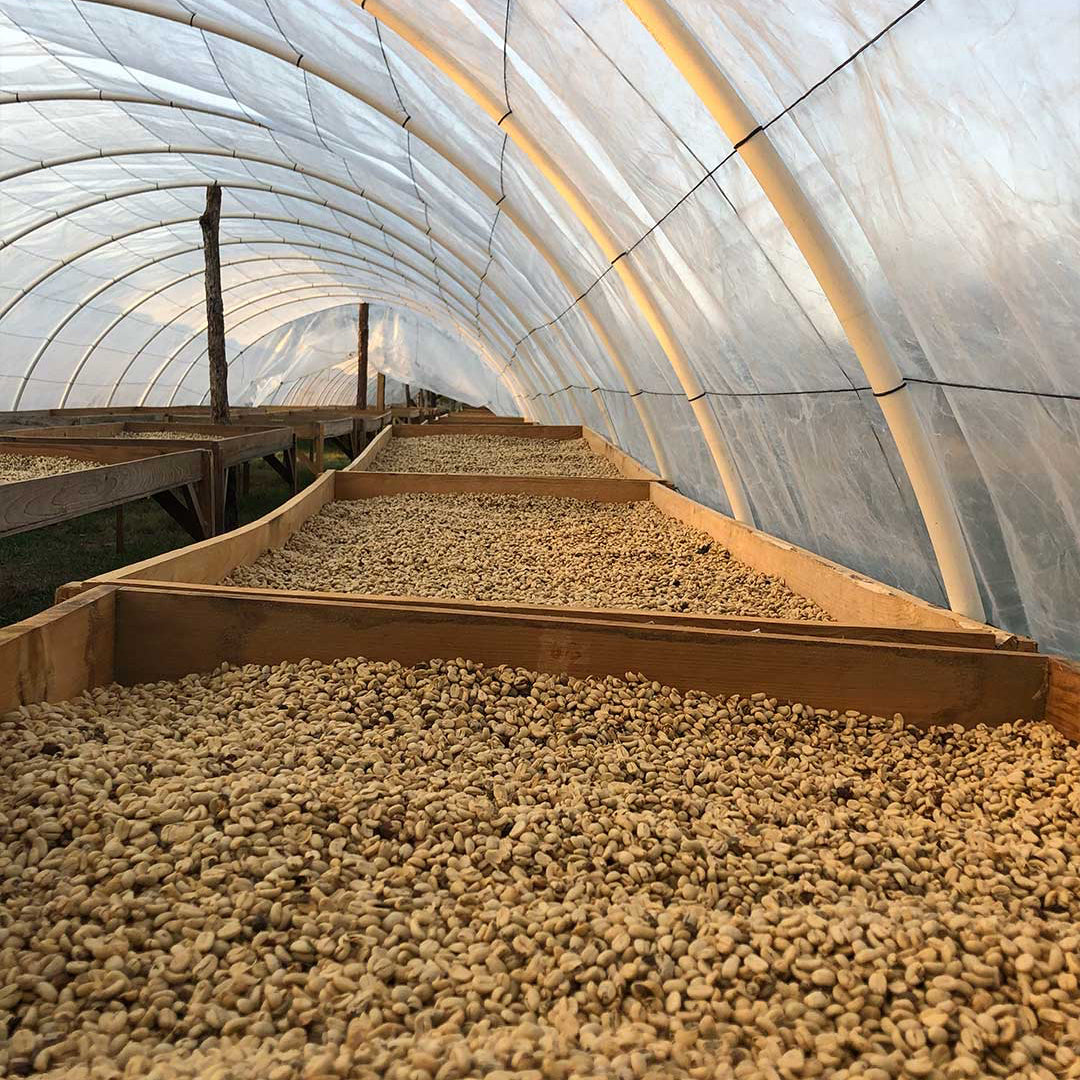
The most famous type is Monsooned Malabar. Here, raw, green coffee beans are exposed to the humid monsoon winds on India's west coast for several weeks, which makes the beans larger, lighter in color, and gives the coffee a deep, almost woody and spicy flavor with low acidity. The method originally arose because coffee shipped to Europe in the era of sailing ships was inadvertently exposed to similar humid conditions en route, and it was discovered that customers actually preferred that taste.

Arabica or Robusta, which dominates in India?

India grows both major coffee species, but Robusta accounts for the largest part of the production. This is an important detail because it often answers another question many people ask: is Indian coffee stronger than other coffees? Yes, most often, because Robusta naturally contains more caffeine and has a fuller, more bitter profile than Arabica. You can read more about the difference between Arabica and Robusta, and why we primarily work with Arabica ourselves, in our article onArabica beans.

Is "cat poop coffee" from India? No, that's a common misconception. The famous Kopi Luwak, where coffee beans are digested by civet cats, comes from Indonesia, not India. The two countries are geographically and coffee-wise far apart, although their names are often confused in searches.

Coffee from India compared to other origins

To make it easier to understand where Indian coffee stands, we have compared it to some of the origins we work with in our roastery in Copenhagen.

India (Monsooned Malabar)
Typical taste: Earthy, spicy, nutty, dark chocolate
Acidity: Low
Body: Full
Dominant species: Primarily Robusta, some Arabica

Brazil
Typical taste: Chocolate, nutty, round and soft
Acidity: Low
Body: Full
Dominant species: Arabica

Kenya
Typical taste: Blackcurrant, plum, lively and juicy
Acidity: High
Body: Medium
Dominant species: Arabica

Ethiopia
Typical taste: Floral, berry, citrus
Acidity: High
Body: Light to medium
Dominant species: Arabica

Colombia
Typical taste: Caramel, nutty, balanced
Acidity: Medium
Body: Medium
Dominant species: Arabica

The above clearly shows why coffee from India is often recommended for people who find bright, acidic coffees too sharp. In terms of taste, it is closer to a place like Brazil than to a fruity coffee from East Africa.

Common questions about coffee from India

Where does coffee in India come from, geographically? Most of it grows in the southern states of Karnataka, Kerala, and Tamil Nadu, in high, shaded plantations, often alongside spices.

Is Indian coffee good quality? Yes, especially Monsooned Malabar and selected Arabica beans from the region are considered interesting specialty coffees with a unique character. As with all coffee, however, the quality depends on how the beans are harvested, processed, and roasted, not just the country of origin.

What is South Indian filter coffee? It is not the same as Monsooned Malabar. South Indian filter coffee (sometimes called "South Indian filter coffee") is a traditional drink made with dark roasted, often chicory-blended coffee, brewed in a small metal filter and served with hot milk and sugar. It is a drinking culture, not a bean type.

Does Copenhagen Coffee Lab have coffee from India?

Short answer: not right now. Our current selection is based on origins such as Brazil, Colombia, Peru, Honduras, Guatemala, Kenya, and Ethiopia, as you can see in our coffee selection. We only work with beans we believe in, grown under the right conditions and delivered from producers we know and trust, and this is the same approach we would take to a new origin like India.

If you are curious about a full-bodied, low-acidity coffee style, while we don't currently have Indian coffee, you can explore our filter coffeeor espresso coffeeand find profiles that are closer to what you are looking for. You can also have it groundif you prefer.

FAQ

Does Copenhagen Coffee Lab sell coffee from India?

Not in our current selection. You can see our entire range of origins on the coffee page.

Does Indian coffee have more caffeine than other coffee?

Often yes, because a large part of India's production is robusta, which naturally contains more caffeine than arabica. This does not mean that all coffee from India is extremely caffeinated; it depends on the blend.

How do I best store coffee with a full-bodied, earthy profile?

Like our own coffee, it is best kept in an airtight container, away from light and heat, and should be used within a few weeks of roasting to preserve the flavour as much as possible.

Can I brew South Indian filter coffee in my regular coffee machine?

Not quite in the same way. The traditional method uses a special two-part metal filter and a specific brewing technique, so the result is different from a regular filter coffee from, for example, a Kalita or Chemex.

What is the difference between Monsooned Malabar and regular Indian coffee?

Monsooned Malabar has undergone a specific process where the beans are exposed to humid monsoon air for several weeks. Not all coffee from India goes through this process, and the taste can therefore vary significantly between different Indian coffees.