Skip to content

Cart

Your cart is empty

Continue shopping
Blue Mountain kaffe, hvad er det, og er den prisen værd?
Written by Jonas Munch Schmidt-AndersenUpdated / Coffee variety / 5 minutes

Blue Mountain coffee, what is it, and is it worth the price?

Blue Mountain coffee is probably the coffee most people have heard of without having tasted it. The name hovers somewhere between legend and luxury item, leaving many with a very specific question: what exactly is Blue Mountain coffee, and does it live up to its reputation?

At Copenhagen Coffee Lab, we work with specialty coffee from all over the world every day, and we are often asked about this particular coffee. Here, you get an honest answer, without exaggeration and without us trying to sell you something we don't stand behind ourselves.

In short: Blue Mountain coffee is Arabica coffee grown in the Blue Mountains region of Jamaica, in high, humid, and shaded mountainous areas. It is known for a mild, well-balanced flavor with low acidity and for being among the world's most expensive coffees, primarily because the supply is extremely limited and strictly certified.

What is Blue Mountain coffee?

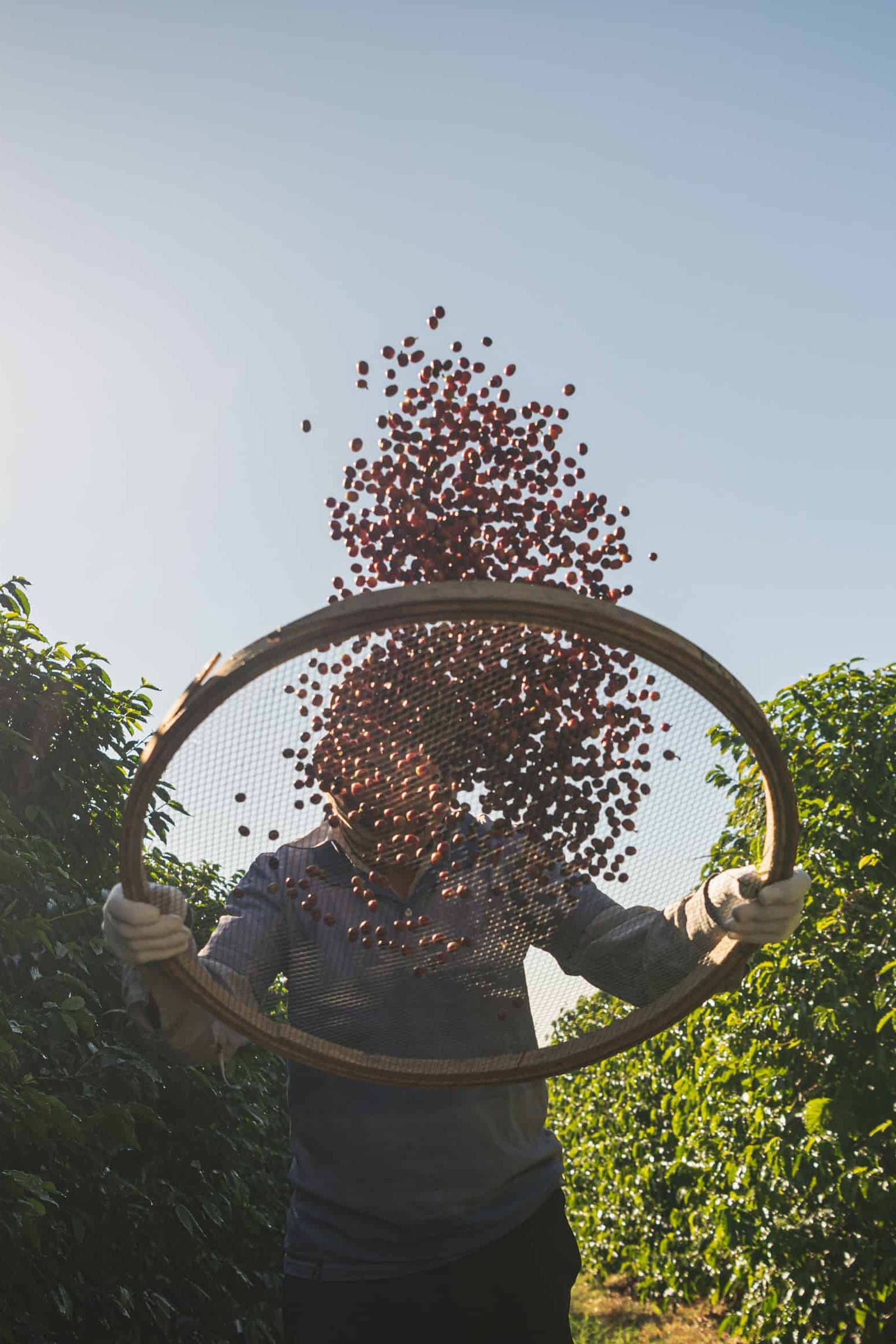
Blue Mountain coffee is an Arabica coffee grown exclusively in a delimited, officially certified area in the Blue Mountains of Jamaica, typically at altitudes between 900 and 1,700 meters above sea level. Only coffee approved by the Coffee Industry Board of Jamaica may be sold under the name "Jamaica Blue Mountain."

It is this combination of geographical protection, high cultivation altitude, and a very small production area that makes the coffee special and rare.
Why is Blue Mountain coffee so expensive?

Many people who search for Blue Mountain coffee are actually asking:What is the most expensive coffee in the world, and why does it cost so much?Blue Mountain often appears on that very list, and there are three main reasons:

Limited area:Only a small, officially delimited area in Jamaica is allowed to use the name.

Low harvest:Mountainous terrain and strict requirements mean limited annual production.

Certification & export:Strict quality control and export regulations add an extra layer to the price.

Demand:Especially in Japan and the US, there is a loyal, willing-to-pay customer base.

It is worth knowing that a high price does not automatically equate to the most complex taste experience; it is often an expression of rarity and status rather than an objective top placement in terms of taste. This brings us to the next obvious question.

How Blue Mountain Coffee Tastes

Compared to more intense, acidic, or fruity Arabica coffees, Blue Mountain is typically described as:

  • Mild and rounded in flavor
  • Low acidity
  • Light sweetness, often with soft nutty or chocolate notes
  • A "clean" cup without prominent, dominant flavor notes

This makes it a good introductory coffee for those who find very acidic or fruity specialty coffee overwhelming, but it is also precisely why some coffee connoisseurs believe that its taste is not as interesting as more distinct origins.

Is Blue Mountain coffee the best coffee in the world?

The short answer: not necessarily. Blue Mountain coffee is renowned, rare, and well-balanced, but "best" is not a fixed concept in the coffee world. It depends on whether you prefer mild tranquility in your cup, or if you're looking for the intense, floral, and fruity profiles often found in, for example, Ethiopian or Kenyan coffee.

At Copenhagen Coffee Lab, we believe that the best coffee is one where the taste, roasting, and origin tell an honest story, not necessarily the one with the highest price tag.

Does Copenhagen Coffee Lab sell Blue Mountain coffee?

To be clear: no. Our current assortment is built around hand-picked beans from, among others,Brazil, Guatemala, Honduras, Colombia, Kenya, and Ethiopia, countries where we know the producers and can vouch 100% for the entire journey from farm to cup. We never add an origin to our assortment just because the name is well-known.

This does not mean that Blue Mountain is a bad coffee; it's just not part of our current selection. If you're curious about a similar mild, round, and well-balanced taste experience, we have great alternatives.

Good alternatives if you like rare, complex coffee

If what you're really looking for is a coffee with personality and a strong expression of origin, these from our own assortment could be a good place to start:

Baragwi - Kenya:Lively notes of blackberry pie, plum sorbet, and vanilla cream.

Finca Ceylan - Guatemala:Balanced, organic

Campo Das Vertentes - Brazil:Chocolatey, mild, and round, a good substitute if you like Blue Mountain's mild style.

If you want to compare more profiles yourself, ourEspresso Tasting PackorFilter Tasting Packis an easy way to taste different origins from the same sender.

If you want to understand what fundamentally makes Arabica coffee (the bean type Blue Mountain also belongs to) special, you can read our guide:What are Arabica beans?

Copenhagen Coffee Lab perspective

Blue Mountain coffee is a good example of how history, rarity, and geography can make a coffee legendary, regardless of whether it is objectively the most intense cup you can get. For us, good coffee is about something else: traceability, craftsmanship, and an honest conversation with you about what you actually get in your cup. If you are curious to explore other rare, hand-picked origins, you are always welcome to see our selection of beans on the webshop or visit one of our cafés.

FAQ

Are Jamaica Blue Mountain and Blue Mountain coffee the same?

Yes. "Jamaica Blue Mountain" is the official, certified designation for coffee grown in the delineated Blue Mountains area of Jamaica. The names are used interchangeably in practice.

How much does Blue Mountain coffee cost?

Prices vary greatly by retailer, but Blue Mountain is generally among the most expensive coffee varieties in the world, primarily due to its very limited supply.

Can Blue Mountain coffee be grown outside Jamaica?

No. The designation is protected and may only be used for coffee from the specific, certified area in Jamaica – regardless of whether the same bean variety is grown elsewhere.

Is expensive coffee always better coffee?

Not necessarily. Price often reflects rarity, certification, and demand, not just complexity of taste. A lesser-known origin can be just as interesting, or more so, in terms of flavour.

Which brewing method is best suited for a mild coffee like Blue Mountain?

Mild, low-acid coffees typically shine in filter coffee or pour-over, where you can taste the soft, clean notes without the heaviness of a strong espresso.