Skip to content

Cart

Your cart is empty

Continue shopping
Filterkaffe: sådan brygger du den perfekte kop
Written by Rasmus Kvistgaard JensenUpdated / Brewing methods / 5 minutes

Filter coffee: how to brew the perfect cup

Filter coffee is one of the world's most widespread and forgiving brewing methods, and one of the best ways to taste all the nuances in a good bean. At Copenhagen Coffee Lab, we roast our filter coffee in our own roastery in Copenhagen, and in this guide, we'll show you exactly how to brew a clean, aromatic cup at home.

In short: Filter coffee is brewed by slowly pouring hot water (92–96 °C) through ground coffee in a paper or metal filter. Use approximately 60 grams of coffee per liter of water and a medium grind the size of coarse sea salt. This will give you a clear cup with distinct sweetness, acidity, and aroma.

What is filter coffee?

Filter coffee is a brewing method where hot water slowly passes through ground coffee in a filter, after which the coffee drips into a pot or cup. It is a gentle and precise technique that highlights the coffee's natural sweetness, acidity, and aromatic nuances, resulting in a cleaner cup than, for example, a French press.

Filter coffee includes both the classic coffee machine and manual pour-over methods such as Kalita, Hario V60, and Chemex. Common to them is that the water is only in brief contact with the coffee, and the filter retains the fine particles. That's why filter coffee tastes so clear.

Copenhagen Coffee Lab explains: We intentionally roast our filter coffee lighter than our espresso. A lighter roast preserves more of the natural flavor notes, from ripe berries and citrus to caramel and nuts, which the filter method is so good at showcasing.
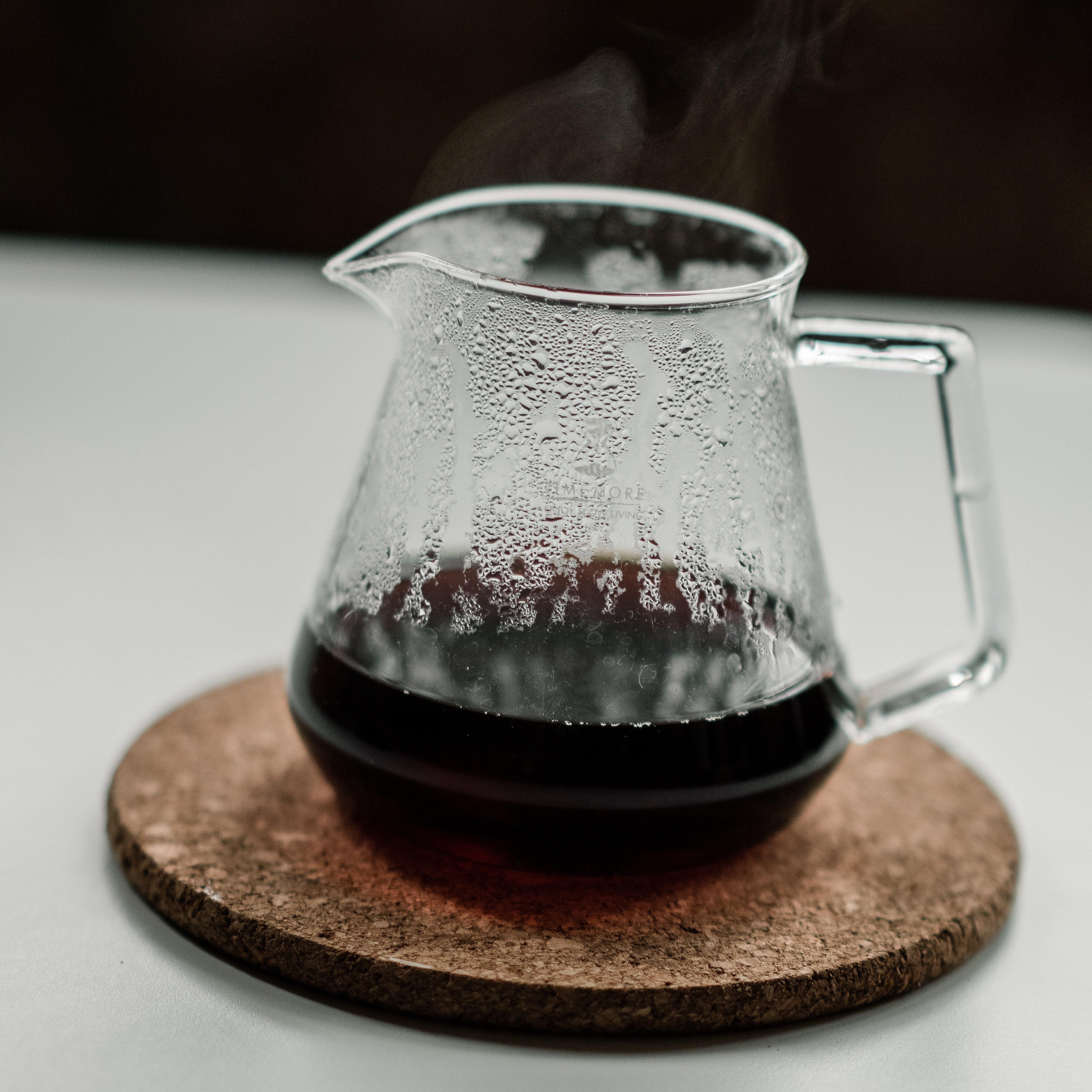
How to brew filter coffee step-by-step

A good cup starts with fresh beans and the right technique. Unlike espresso, filter coffee doesn't require high pressure; instead, it rewards calm and precision.

What you'll need

  • Freshly roasted coffee, preferably freshly ground
  • A filter (paper or metal) and a brewer or coffee machine
  • A scale and preferably a thermometer
  • Filtered water


Coffee-to-water ratio: Approx. 60 g of coffee per litre of water
Water temperature: 92–96 °C
Water: Preferably filtered
Grind: Medium - the size of coarse sea salt
Method: Classic coffee machine or pour-over (Kalita, V60, Chemex)

Brewing guide

How to: Rinse the filter with hot water, add the ground coffee, and pour in a little water to allow the coffee to "bloom" for 30–45 seconds. Then pour the rest of the water calmly and evenly. Brew with care, especially with manual pour-over methods, where your pouring technique can be clearly tasted in the cup.

How much coffee should you use?

The short answer: approx. 60 grams of coffee per litre of water. This is a good starting point for most filter methods, and from there you can adjust to taste; a little more coffee gives a stronger cup, a little less gives a lighter one.

Don't have a scale? As a rule of thumb, this is equivalent to approximately 1 tablespoon of coffee per cup. However, we recommend a scale if you want to achieve the same good cup every time; precise dosing is the simplest way to consistent flavour.

Choose the right coffee for filter

For filter coffee, you can choose between whole beans and ground coffee, depending on your equipment and habits.

  • Whole beans retain the aroma best. If you have a grinder at home, we definitely recommend this solution because freshly ground coffee tastes noticeably more vibrant.
  • Ground coffee is ideal if you want it easy. We grind it to suit your method, whether you use a Moccamaster, Chemex, or V60.

If you're in doubt, you can start with one of our filter coffees like Proexo CO-OP Filter – Honduras or explore the entire selection of filter coffee. If you want to make it even easier to get started with pour-over, our Kalita Kit includes brewer, carafe, filters, and coffee all in one.

For you, this means: If you have a grinder: buy whole beans and grind just before brewing. If not: choose ground, and tell us your method so we can grind it correctly from the start.

Filter Coffee vs. French Press and Espresso

The method determines how the coffee tastes. Here are the differences summarised:

Filter Coffee
Filter: Paper/metal
Pressure: None
Typical Cup: Clear, clean, and aromatic

French Press
Filter: Metal mesh
Pressure: None
Typical Cup: Fuller, oilier, and sediment

Espresso
Filter: None
Pressure: High
Typical Cup: Concentrated, intense, and creamy

If you want a clean cup that highlights the delicate flavour nuances, filter is the obvious choice. If you prefer a stronger, more concentrated coffee, you can instead look towards espresso.

Is filter coffee healthy?

Filter coffee is one of the "cleaner" choices because the paper filter retains some of the natural oils (coffee oils like cafestol and kahweol). Many also find filter coffee easy to drink throughout the day because the cup is large and the taste is mild. As with all coffee, it's about quantity and balance; enjoy it as part of a varied daily routine.

Conclusion: our perspective on filter coffee

For us, filter coffee is the purest way to taste a bean's true character. That's why we roast daily, ship quickly, and select only beans with a focus on origin, sustainability, and taste, many of them organic and freshly roasted. When you brew with fresh beans, the right water, and a little care, you'll get a cup that's hard to beat.

FAQ

Can I brew filter coffee without a pour-over brewer?

Yes. A regular coffee machine also makes filter coffee. Pour-over gives you more control, but the principles – fresh coffee, correct dosage, and good water – are the same.

Which grind size is suitable for filter coffee?

A medium grind, the size of coarse sea salt. If you grind too fine, the coffee will be bitter; too coarse, and it will be thin and sour.

How long does ground filter coffee stay fresh?

Whole beans preserve the aroma best. If the coffee is ground, we recommend using it quickly and storing it in an airtight, dark, and dry place.

Can filter coffee be made decaffeinated?

Yes. Our Sul de Minas Decaf is brewed exactly like regular filter coffee.

What do I do if my filter coffee tastes bitter or sour?

Bitter coffee is often ground too finely or brewed too hot; adjust the grinder to a coarser setting. Sour coffee is typically underextracted; grind a little finer or extend the brewing time.