Skip to content

Cart

Your cart is empty

Continue shopping
Colombiansk kaffe: Sådan smager den, og derfor holder vi af den
Written by Jonas Munch Schmidt-AndersenUpdated / Country / 5 minutes

Colombian Coffee: What It Tastes Like and Why We Love It

Colombian coffee is known for its mild acidity, natural sweetness, and a full-bodied, easy-drinking body that makes it one of the world's most popular coffee origins. It is grown high in the Andes Mountains, where slow ripening gives the beans extra depth of flavor. With us, it is represented by Almibar, our single origin from the Huila region.

In short

Colombian coffee is 100% Arabica coffee grown in the highlands of Colombia, typically at an altitude of 1,200-1,900 meters. It is characterized by a balanced flavor with notes of caramel, nuts and mild acidity, a medium to full body, and a predominantly washed process, resulting in a clean and clear cup.

What characterizes Colombian coffee in terms of taste?

When people ask what Colombian coffee tastes like, the answer is rarely unambiguous, because Colombia is a large country with many microclimates. But there are some common features you can count on.

Colombian coffee typically has:

  • Balanced acidity, fresh, but never sharp

  • Natural sweetness, often towards caramel, brown sugar or roasted nuts

  • Medium to full body, round in the mouth without being heavy

  • Clean, clear cup, thanks to the washed process (more on that below)

Our own Almibar from Huila is a good example: it dances between maple syrup, roasted almonds and dried apple, with a richness that remains soft and creamy. It is precisely this type of complexity that Colombian coffee is famous for.
Where is Colombian coffee grown and why does it matter?

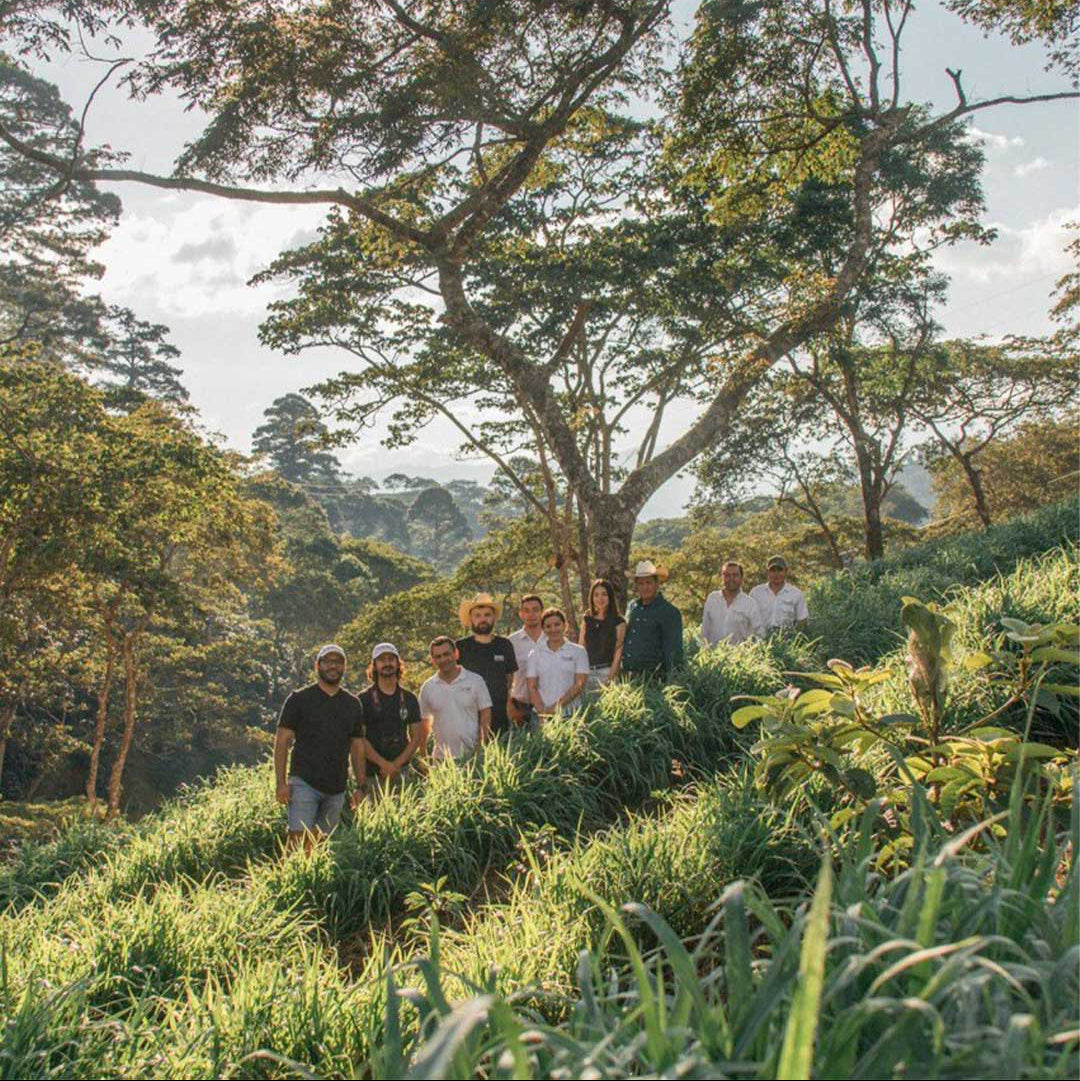
Colombia is close to the equator, but it's the altitude, not the latitude, that makes the difference. Coffee is primarily grown in the Andes Mountains, where plantations are often located between 1,200 and 1,900 meters above sea level.

The higher the beans grow, the slower they ripen. Slow ripening means more time to develop sugars and aromatic compounds, which is part of the explanation for the sweetness Colombian coffee is known for.

Our Almibar specifically comes from Huila, one of Colombia's most renowned coffee districts, where Caturra, Castillo, and Variedad Colombia varieties are grown at an altitude of 1,400-1,800 meters.

Terroir matters for coffee, just as it does for wine. Soil, rainfall, altitude, and processing all affect the final taste, which is why two Colombian coffees from different regions can taste completely different.

Colombian coffee vs. Arabica, what's the difference?

A question we often encounter is what the actual difference is between Colombian coffee and Arabica coffee. The answer is simple: almost all coffee from Colombia is Arabica. "Colombian coffee" describes wherethe bean comes from, while "Arabica" describes which speciesof coffee plant it originates from.

Colombian coffee

Definition: Coffee grown in Colombia
Taste: Balanced, caramel, nuts
Growing altitude: 1,200-1,900 m.a.s.l.
Share of world coffee production: Colombia is one of the world's largest Arabica producers

Arabica in general

Definition: Coffee species (Coffea arabica) grown globally
Taste: Varies by origin (floral, fruity, chocolate notes)
Growing altitude: Typically 800-2,200 m.a.s.l.
Share of world coffee production: Arabica accounts for approx. 60-70% globally

If you want to understand Arabica beans in depth, you can read more in our article on what Arabica beans are, where we also compare them to Robusta.

The Washed Process: Why the Cup is So Clean

Most Colombian coffees, including our Almibar, undergo a washed process. This means the pulp is removed from the bean before drying, unlike natural processes where the bean dries inside the whole coffee cherry.

The result is a cleaner, more precise cup, where the coffee's own notes, rather than the fermentation of the fruit, clearly stand out. This is one reason why Colombian coffee is often perceived as "clean and clear" rather than wild and experimental.

How to Brew Colombian Coffee at Home

Colombian coffee's balance makes it suitable for several brewing methods, but it truly shines as filter coffee.

Brewing Methods

Filter/Pour-over: Very suitable for Colombian coffee. Highlights sweetness and floral/nutty notes.

French Press: Suitable for Colombian coffee. Provides more body, while maintaining balance.

Espresso: Works for Colombian coffee, but may lose some of its bright character.

Our Almibar is roasted for filter and is therefore easily accessible and flexible, equally suitable for slow mornings and shared moments with guests. If you wish to experiment with grind size according to your method, you can find pre-ground coffee tailored to your brewing methodor explore our entire selection of filter coffee.

Our Recommendation: Almibar, Colombia

If you're looking for the best Colombian coffee beansto start with, Almibar is our natural recommendation. The name means "sugary syrup" in Spanish – and sweetness is exactly what drives this coffee.

Technical data: Almibar, Colombia
Country: Colombia
Region: Huila
Altitude: 1,400-1,800 m.a.s.l.
Varieties: Caturra, Castillo, Variedad Colombia
Process: Washed
Roasted for: Filter
Tasting notes: Maple syrup, roasted almonds, dried apple
Sweetness: 4/5
Acidity: 3/5
Body: 3/5

It's our favorite when we want something that's both easy to brew and has character, gentle complexity, soft texture, and a sweet, lingering finish. As we say about it ourselves: imagine a cowboy riding into town with his hat pulled low, ready to stir things up.

See Almibar – Colombia

FAQ

Is Colombian coffee strong coffee?

No, not in the sense of strong or bitter. Colombian coffee is typically mild to medium in strength, focusing on balance and sweetness rather than heaviness. However, the roast level does matter; the darker the roast, the stronger the flavour.

Can I use Colombian coffee for espresso?

Yes, but it is often roasted for filter brewing, as that is where its floral and nutty notes are best expressed. Our Almibar is specifically roasted for filter brewing; if you would like a Colombian-inspired espresso, we recommend keeping an eye on our espresso selection for upcoming single origins.

Is all Colombian coffee the same?

No, not at all. Colombia has several coffee regions, including Huila, Nariño, and Antioquia, each providing its own expression depending on altitude, soil, and microclimate. It is precisely this variation that makes single origins interesting.

Is Colombian coffee always organic or Fairtrade?

Not automatically, it depends on the individual producer and certification. We work with coffee farmers we know and trust, and provide certification directly on each product page.