Skip to content

Cart

Your cart is empty

Continue shopping
Brasiliansk kaffe, det du bør vide, før du vælger din næste pose
Written by Jonas Munch Schmidt-AndersenUpdated / Country / 5 minutes

Brazilian Coffee, What You Should Know Before Choosing Your Next Bag

Brazilian coffee is known for being smooth, sweet, and easy to drink, with notes of chocolate, caramel, and nuts, and an acidity that rarely dominates. This is why it is often called "the perfect everyday cup"; it requires no special occasion but still delivers enough depth to surprise you.

For us, Brazilian coffee is not just one product; it's an entire world of flavors, ranging from the sweet and tangy espresso Campo Das Vertentes to the decaffeinated, chocolate-heavy Sul de Minas Decaf.

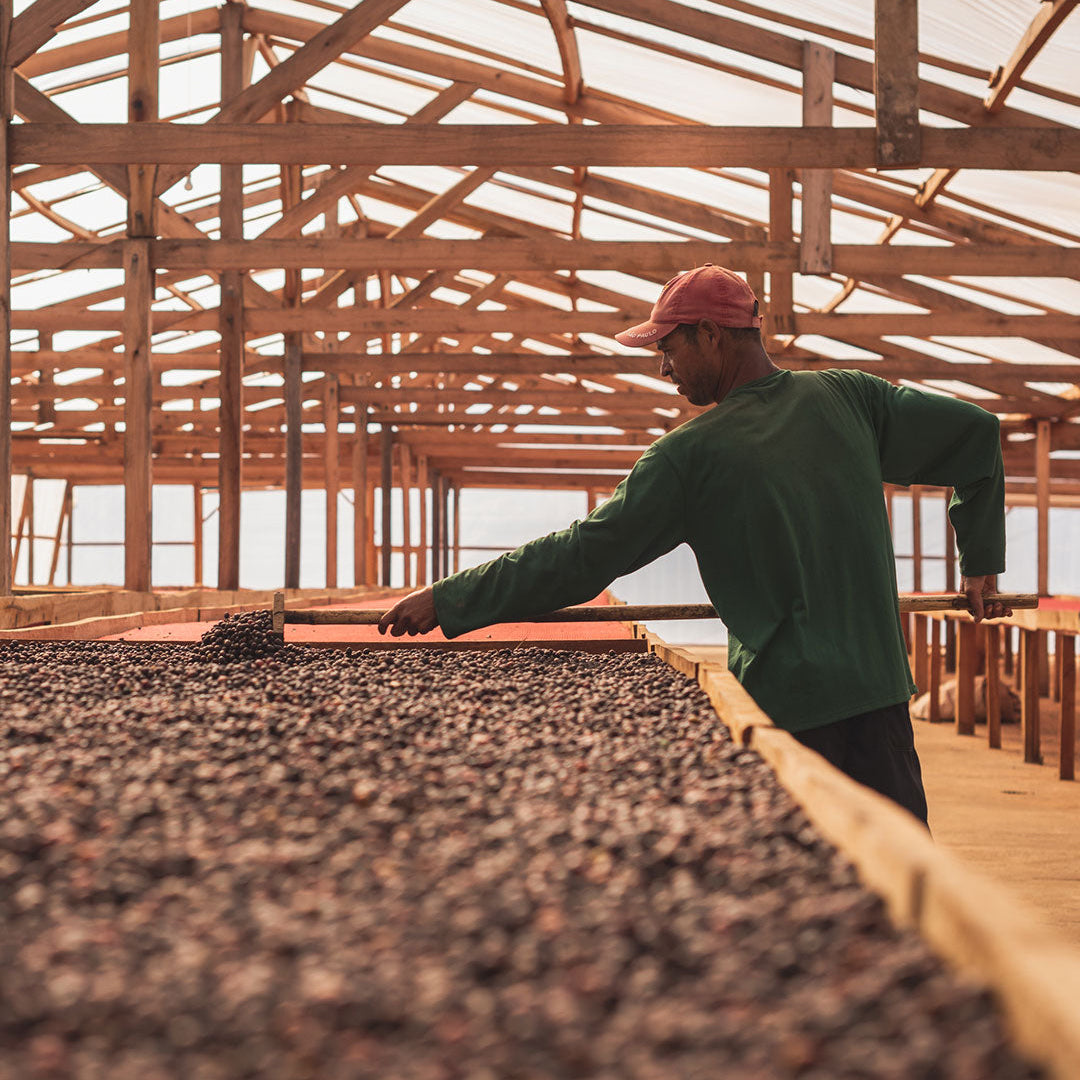
In short: Brazilian coffee is typically mild and well-rounded in taste, with low acidity and notes of chocolate, caramel, nuts, and dried fruit. This is partly due to the semi-washed or natural processing method and the lower, more consistent altitudes at which the coffee is grown. This makes Brazilian coffee an excellent choice if you prefer a smooth, balanced cup over an acidic or intense one.

What are the characteristics of Brazilian coffee?

When people ask "what does Brazilian coffee taste like?", the answer is usually the same, no matter where in the world you ask: nutty, chocolatey and full-bodied, with a sweetness that carries the cup through.

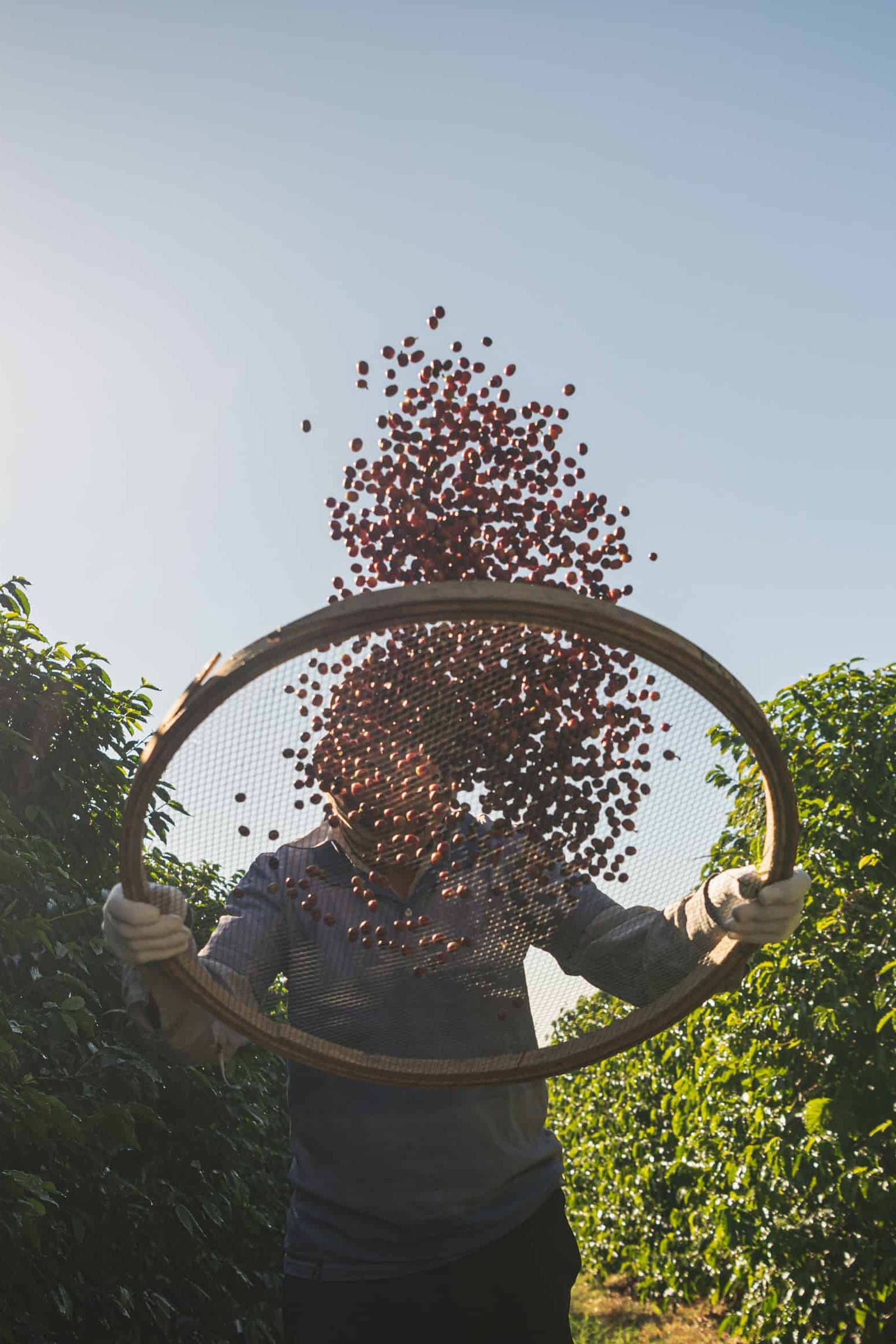
This is related to where and how the coffee is grown. Brazil is the world's largest coffee-producing country, and a large part of the production is grown at moderate altitudes on large, sunny plantations – unlike, for example, Ethiopia's high-altitude, mountainous fields. This results in a more even maturation and a rounder, less acidic cup.

Characteristics: Typical expression in Brazilian coffee
Sweetness: High, often caramel, chocolate or cookie dough
Acidity: Low to moderate
Body/fullness: Medium to full-bodied
Typical notes: Chocolate, caramel, nuts, dried fruit, cashew
Process: Often natural or semi-washed

As we also write in our article on Arabica beans, Brazil is one of the world's major Arabica countries, and here the profile is precisely "chocolate, body and low acidity". This is the same character you will find in our own Brazilian coffees.

Where in Brazil does the coffee come from?

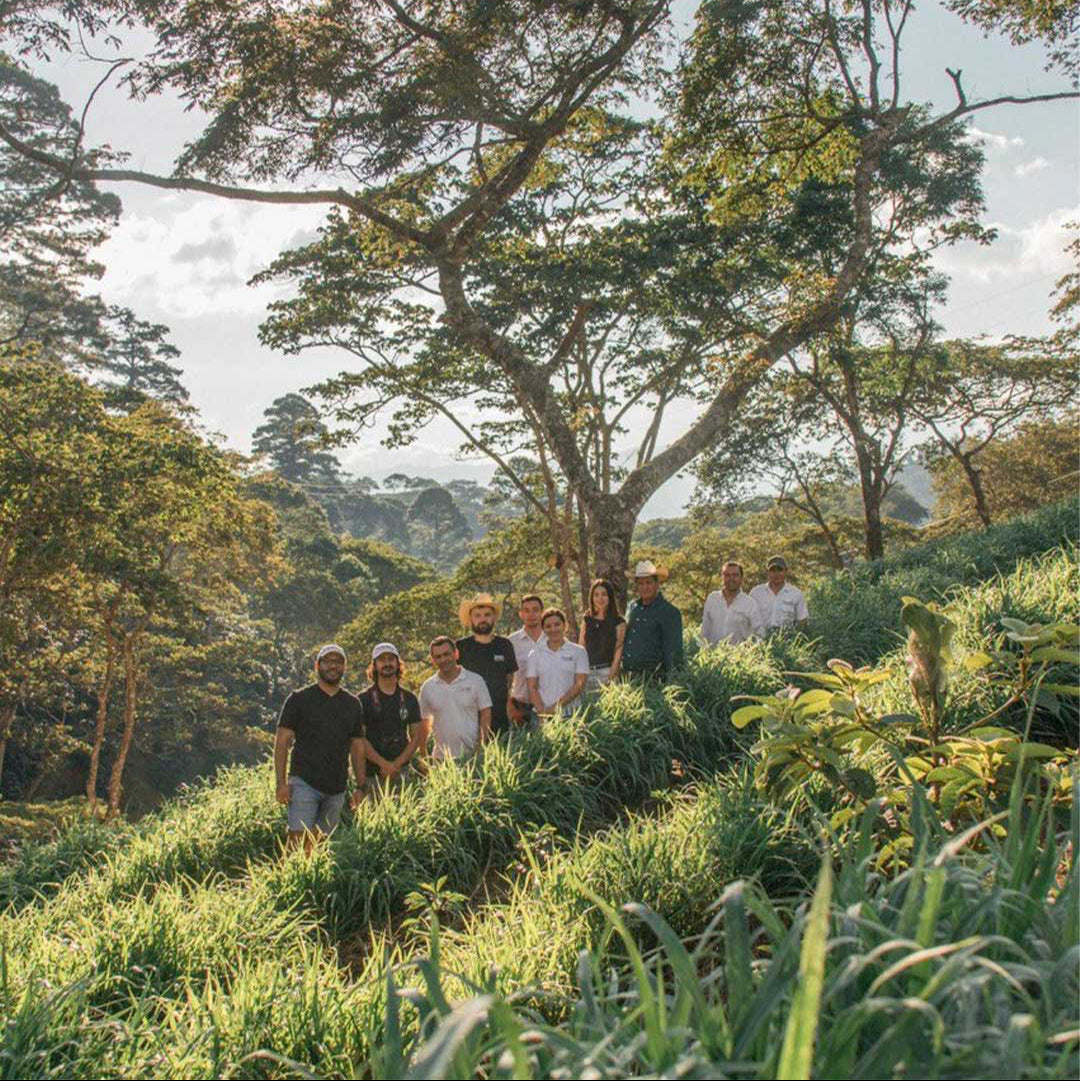
We won't go into detail about Brazil's coffee history in this article; suffice it to say that the country currently accounts for about a third of the world's coffee production, primarily from the state of Minas Gerais. This is where both of our Brazilian coffees come from:

Region: Minas Gerais (Campo Das Vertentes)
Altitude: 900–1,200 m.a.s.l.
Known for: Sweetness, caramel, fruitiness

Region: Sul de Minas
Altitude: 700–1,350 m.a.s.l.
Known for: Chocolate, softness, cashew notes

Brazilian coffee at Copenhagen Coffee Lab

We roast all our beans in our own roastery in Copenhagen, and ship the coffee within 2 weeks of roasting. This also applies to our two Brazilian coffees, which have been chosen because they represent two very different, but equally genuine sides of Brazilian coffee: the classic sweet espresso and the soft, decaffeinated version.

Campo Das Vertentes

Region: Minas Gerais
Variety: Yellow Bourbon
Process: Semi-washed
Taste notes: Caramel, cookie dough, redcurrant
Roasted for: Espresso
Caffeine: Yes
Price (1000g): DKK 315.00

Sul de Minas Decaf

Region: Sul de Minas
Variety: Various
Process: CO2 decaffeination
Taste notes: Chocolate, grape, cashew nut
Roasted for: Filter and Espresso
Caffeine: No
Price (1000g): DKK 345.00

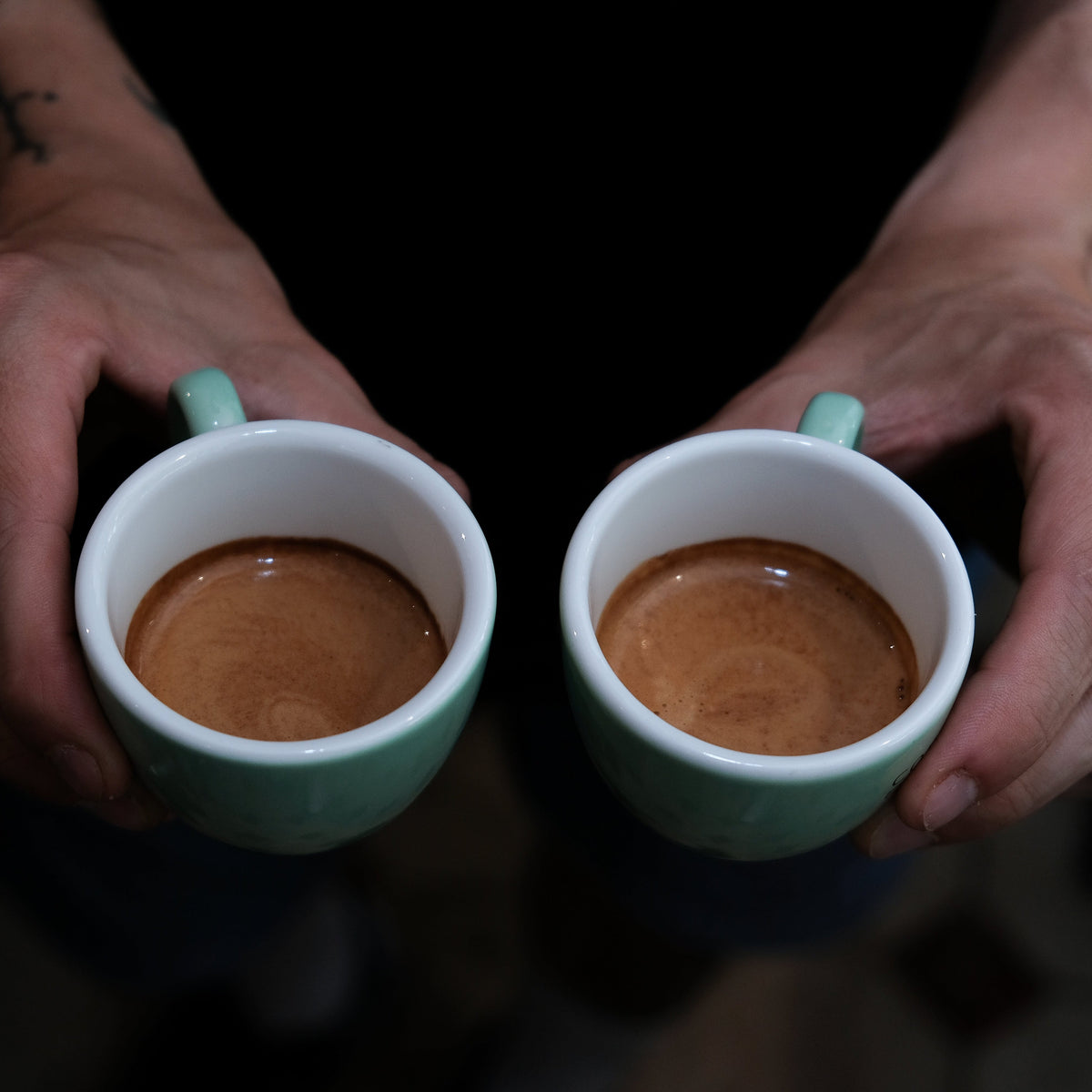
Campo Das Vertentes is, as we describe it, "the late arrival to the party everyone wants to talk to"– a sweet, balanced espresso with notes of chocolate and dried fruit, which feels rich without being heavy.

Sul de Minas Decaf is for those who love the soft, chocolatey Brazilian profile, but want to forgo the caffeine. We use CO2 decaffeination precisely because the method preserves the original sweetness and delicate citrus notes, instead of flattening the taste, which decaf can otherwise tend to do.

Is Brazilian coffee strong, sour or mild?

One of the questions we most often encounter is whether Brazilian coffee is "strong". The answer is: it depends on whether you mean taste strength or caffeine content.

  • In terms of taste, Brazilian coffee is rarely sharp or acidic; it is soft, rounded, and easy to drink, even black.
  • In terms of caffeine, it depends solely on whether you choose a coffee with or without caffeine, not on the fact that the coffee is Brazilian. Our Sul de Minas proves that you can get the same soft profile completely without caffeine.

If you are looking for a coffee with high acidity and prominent fruit notes, Brazilian coffee is typically not the right way to go; instead, you should look at one of our coffees from Kenya or Ethiopia.

Brazilian vs. Colombian coffee, what's the difference?

Brazilian and Colombian coffee are often mentioned in the same breath, but they are not the same.

Brazilian Coffee
Acidity: Low
Sweetness: High, caramel/chocolate
Typical body: Full, soft
Process: Often natural/semi-washed

Colombian Coffee
Acidity: Moderate to high
Sweetness: High, often caramel/nuts
Typical body: Balanced, creamy
Process: Often washed

If you want to taste the difference yourself, you can compare our Campo Das Vertentes with our Almibar from Colombia, two coffees that show how differently South America can taste from bean to bean.

How to best brew Brazilian coffee

Because Brazilian coffee is naturally sweet and low in acidity, it performs best with methods that emphasize body and sweetness over acidity:

  • Espresso, Campo Das Vertentes is roasted specifically for this and delivers a sweet, balanced shot.
  • Filter/pour-over, suitable for Sul de Minas Decaf, where the soft citrus and chocolate notes are given space.
  • With milk, both coffees pair well with milk, as the sweetness is not drowned out by the cream.

See our full selection of coffee beans, or find inspiration for brewing methods in our guide to espresso beans.

The Copenhagen Coffee Lab Perspective

We don't choose Brazilian coffee because it's safe or expected; we choose it because it does something no other origin does quite the same way: it's soft, approachable, and sweet without being boring. Whether you have a bag of Campo Das Vertentes or Sul de Minas Decaf in your hand, you'll get a cup that's made to be drunk every day, not just for special occasions.

FAQ

Is Brazilian coffee always Arabica?

Not necessarily, but the vast majority of coffee you find in specialty coffee shops, including our own, is 100% Arabica. Robusta is also grown in Brazil, but is typically used for cheaper, industrially produced coffee.

Can I get decaffeinated Brazilian coffee?

Yes. Our Sul de Minas Decaf is a Brazilian coffee where the caffeine is removed via CO2 decaffeination, a method that preserves the sweetness and soft citrus notes instead of flattening the flavour.

How long does Brazilian coffee stay fresh?

As with all our coffee, we recommend drinking it within a few weeks of roasting and storing it airtight, in a dark and cool place. We always ship the coffee roasted within 2 weeks, so you get it as fresh as possible.

Is Brazilian coffee suitable for beginners?

Yes, the soft, low-acid profile makes Brazilian coffee one of the easiest starting points if you're new to specialty coffee or prefer a mild cup over an acidic or intense one.